A wind-down routine that works
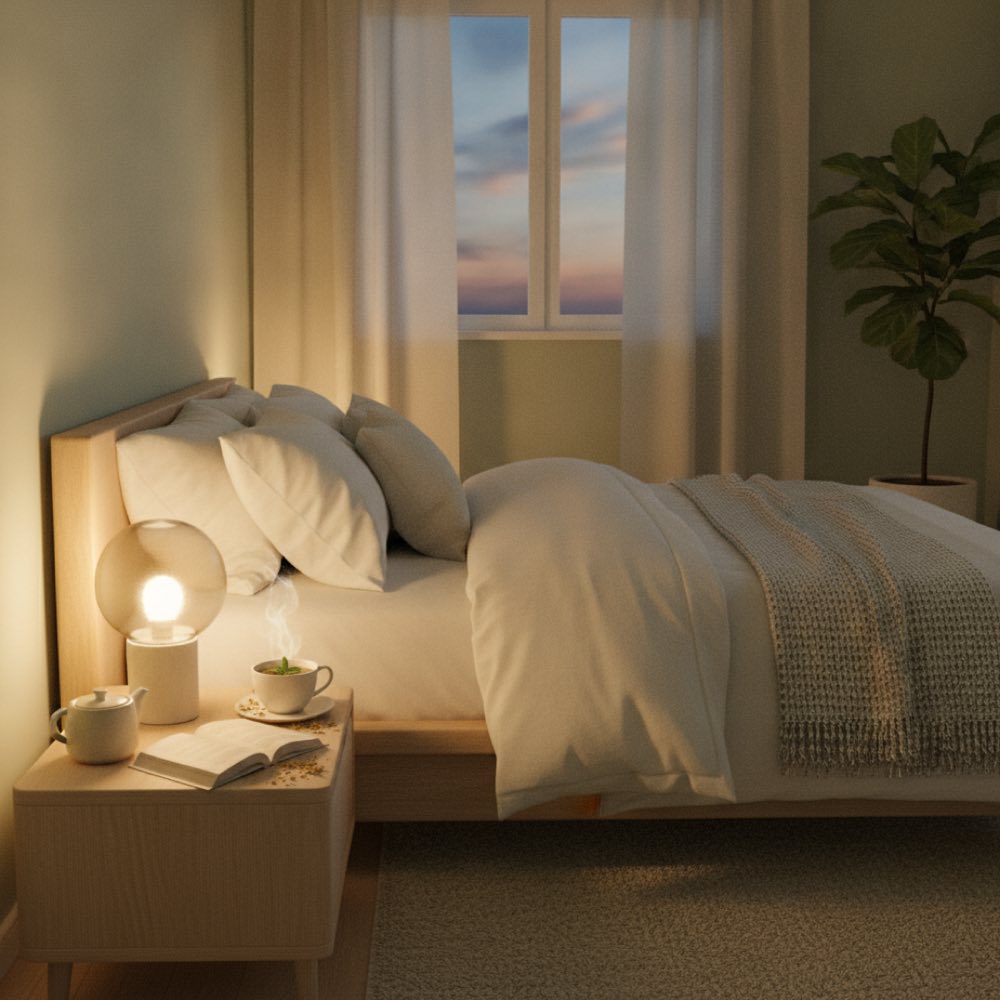
If falling asleep feels like a nightly negotiation, the problem may not be your bed but the hour before it. A consistent wind-down routine signals to your body that the day is closing, making it easier to drift off and wake up feeling genuinely rested. Here are three small evening adjustments that tend to make a noticeable difference.
Dim the lights before you dim yourself
Bright overhead lighting keeps your brain in daytime mode long after you'd like to be winding down. In the last hour before bed, try switching off the main lights and leaning on softer, lower sources instead, such as a single lamp in the corner or a warm bulb by your reading chair. The shift in brightness gently nudges your body toward rest.
You don't need a complicated setup to make this work. The goal is simply contrast: a clear difference between the bright, busy evening and the calm, dim stretch right before sleep. When your environment starts to feel like nighttime, your mind tends to follow.
Give screens an earlier curfew
Phones, tablets and laptops are designed to hold your attention, which is the opposite of what you want as bedtime approaches. Beyond the light they emit, the endless scrolling and quick replies keep your mind engaged and alert. Setting a soft curfew, even just twenty or thirty minutes before bed, gives your brain room to downshift.
Fill that gap with something low-key that you actually enjoy. A few ideas that tend to ease the transition:
- Reading a few pages of a paper book or magazine
- Light stretching or a slow walk around your home
- Jotting down tomorrow's to-do list so it's off your mind
- A warm shower or a simple cup of caffeine-free tea
Keep it consistent and comfortable
Your body loves a predictable rhythm. Going to bed and waking up around the same time each day, weekends included, helps your internal clock settle into a pattern, so sleepiness arrives more reliably each night. A wildly different weekend schedule can leave you feeling jet-lagged come Monday, even if you never left town.
The space itself matters too. A bedroom that's cool, quiet and dark gives your body the best conditions to rest, so it's worth tidying the obvious distractions and blocking stray light where you can. Pair a steady schedule with a calm environment, and over a week or two you may find that falling asleep feels far less like work and waking up feels far more refreshing.
This article is for general information only and is not medical advice. Always talk to a qualified healthcare professional before making changes to your diet, exercise or health routine.